Chimney and flashing repair, the real source of most Greer leaks
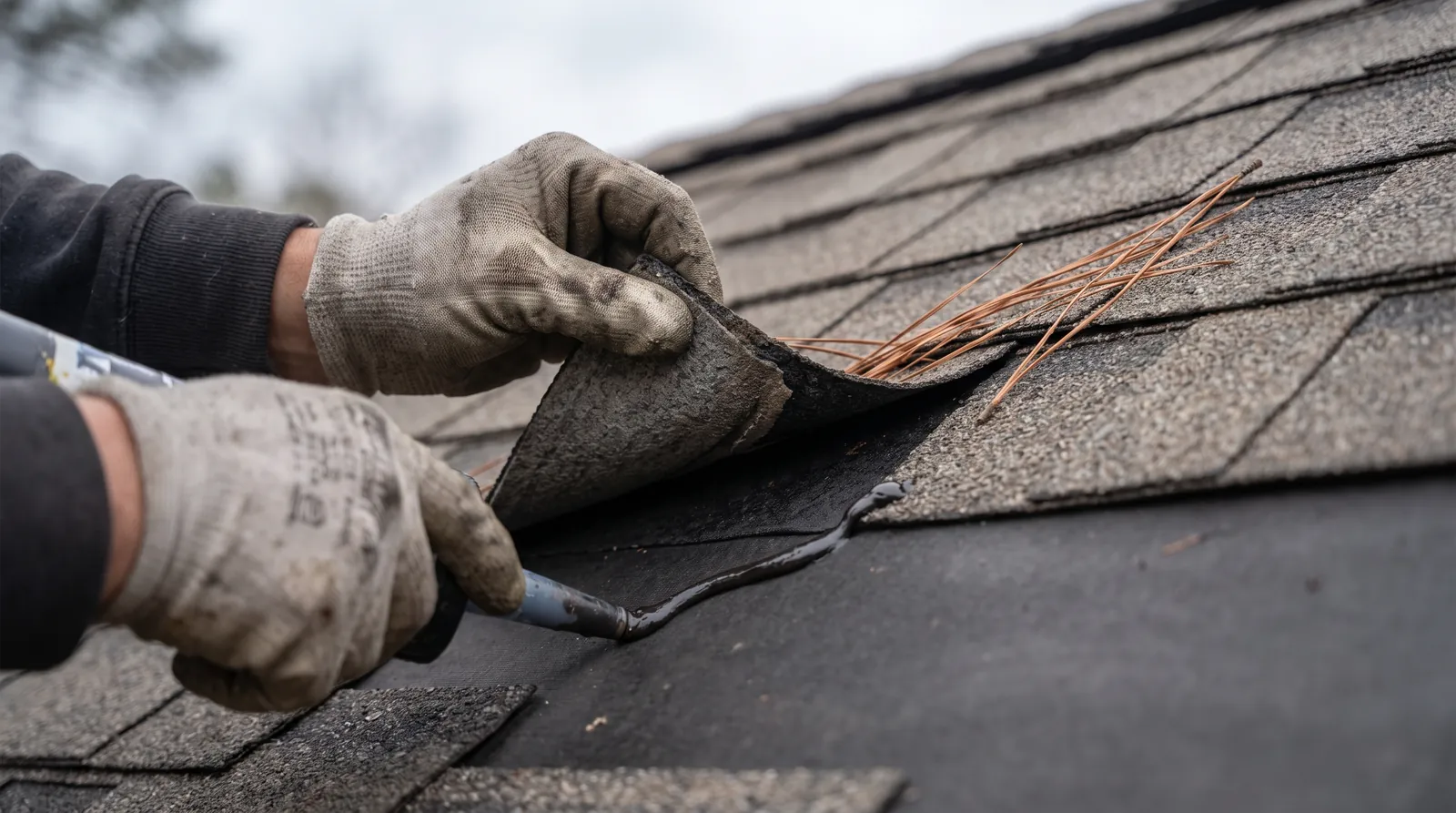
Out of every ten leaks we track down, nine have nothing to do with the shingles. The flashing is to blame: a chimney built without a cricket, step flashing smeared with caulk instead of woven in, a valley filled with pine needles. We repair them with metal that holds up.
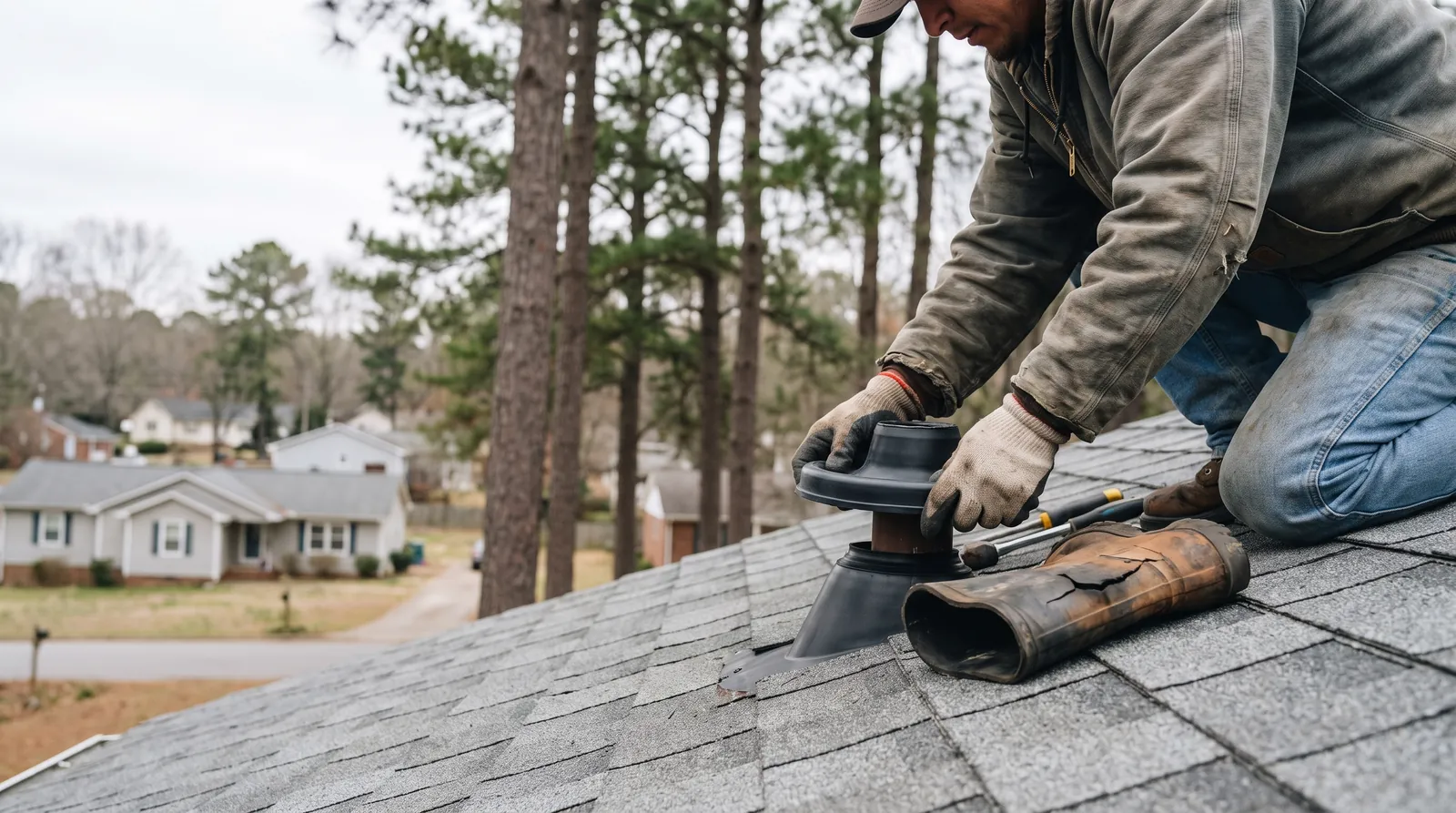
When someone in Greer phones us about a ceiling stain, the shingles are seldom what failed. More often it is one of these. A chimney on the back slope has no cricket, so pine needles pile up behind it. A previous roofer ran a bead of caulk along the step flashing at a dormer wall instead of replacing it. Valley metal has rusted through after ten years under debris. The rubber collar on a pipe boot has split in the sun. A skylight curb has opened up, or someone bolted a satellite dish right through the shingles. Done properly, each of these is a small, targeted repair. Done with a tube of sealant, each one becomes a leak that keeps coming back.
Chimneys get the complete job. Base flashing is woven in with the shingles. Any chimney wider than 30 inches gets a cricket, also called a saddle, on its uphill side. Counterflashing is cut into the mortar joints and sealed there, rather than stuck to the face of the brick and caulked. Along walls, new step flashing goes behind the siding, not on top of it. Valleys are cleared, checked and given new metal with ice-and-water underneath. Boots are replaced in lead or long-life silicone. We photograph every repair before and after and show you exactly where the water had been coming in.
The work, piece by piece
Chimney flashing and crickets
New base, step and counterflashing, with a cricket built wherever the chimney is wide enough to call for one.
Step and wall flashing
Fresh step flashing woven in with the shingles behind siding or stucco, and kick-out flashing where the wall meets the eave.
Valleys
Debris cleaned out, rusted metal replaced, ice-and-water put down and the shingles laid back in.
Boots and vents
Split rubber boots replaced with lead or silicone, and rusted vents and turtle vents swapped out.
Chimney crowns and caps
Cracked crowns are sealed or rebuilt, and stainless caps keep rain and animals out of the flue.
Tracking down the leak
An attic inspection, a water test if needed, and photos explaining the source before any repair begins.
What flashing repairs cost in Greer, SC
| Item | Usual price, installed | Good to know |
|---|---|---|
| New pipe boot | $175 – $350 | Each boot, in lead or silicone |
| Step or wall flashing, one wall | $450 – $1,200 | Siding taken off and put back |
| Chimney reflashed (base, step and counter) | $650 – $1,800 | Counterflashing cut into mortar |
| Chimney cricket built and flashed | $500 – $1,200 | Usually done with the reflash |
| Valley repaired, each | $500 – $1,500 | New metal and underlayment |
| Chimney crown repair or cap | $250 – $900 | Seal the crown or add a stainless cap |
Once we have found the source, each flashing repair is priced as its own item. If the roof around that flashing is near the end of its life, we will tell you, instead of selling a repair that a re-roof would replace a year later.
From the job photos
Chimney & flashing: what people ask us
Why does the chimney leak only when it pours?
Most often water is backing up behind a chimney that has no cricket, or wind is driving rain past counterflashing that was only surface-mounted. Either way the fix is rebuilding the flashing correctly, not adding more caulk.
Won't caulk do the job?
For a year, maybe two. Sealant on flashing dries out and cracks, and water gets in behind it, so any roofer who fixed your leak with a tube just put the problem off. Metal flashing that is lapped the right way stays watertight with no sealant at all.
Can you track down a leak that comes and goes?
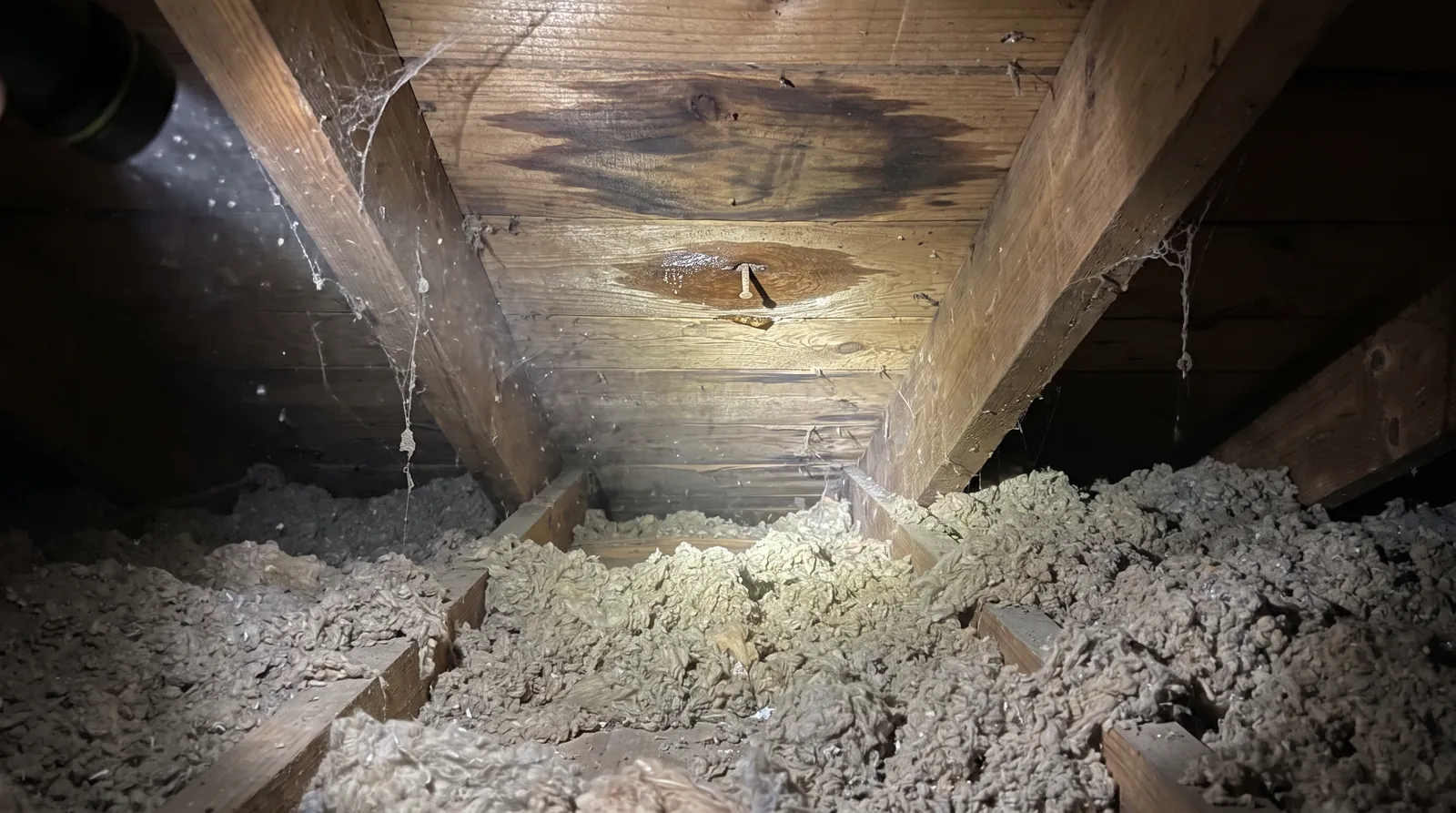
Yes. In the attic, the stain on the decking leads us to the entry point, and when it does not, we run a hose test. You see photos of the source before we give you a price.
Do I also need a chimney sweep to look at it?
For the flue and the firebox, yes. We take care of the outside: flashing, crown and cap. If the crown is badly cracked or the brick is spalling, we will tell you to call a mason.
Can you stop a skylight leak?
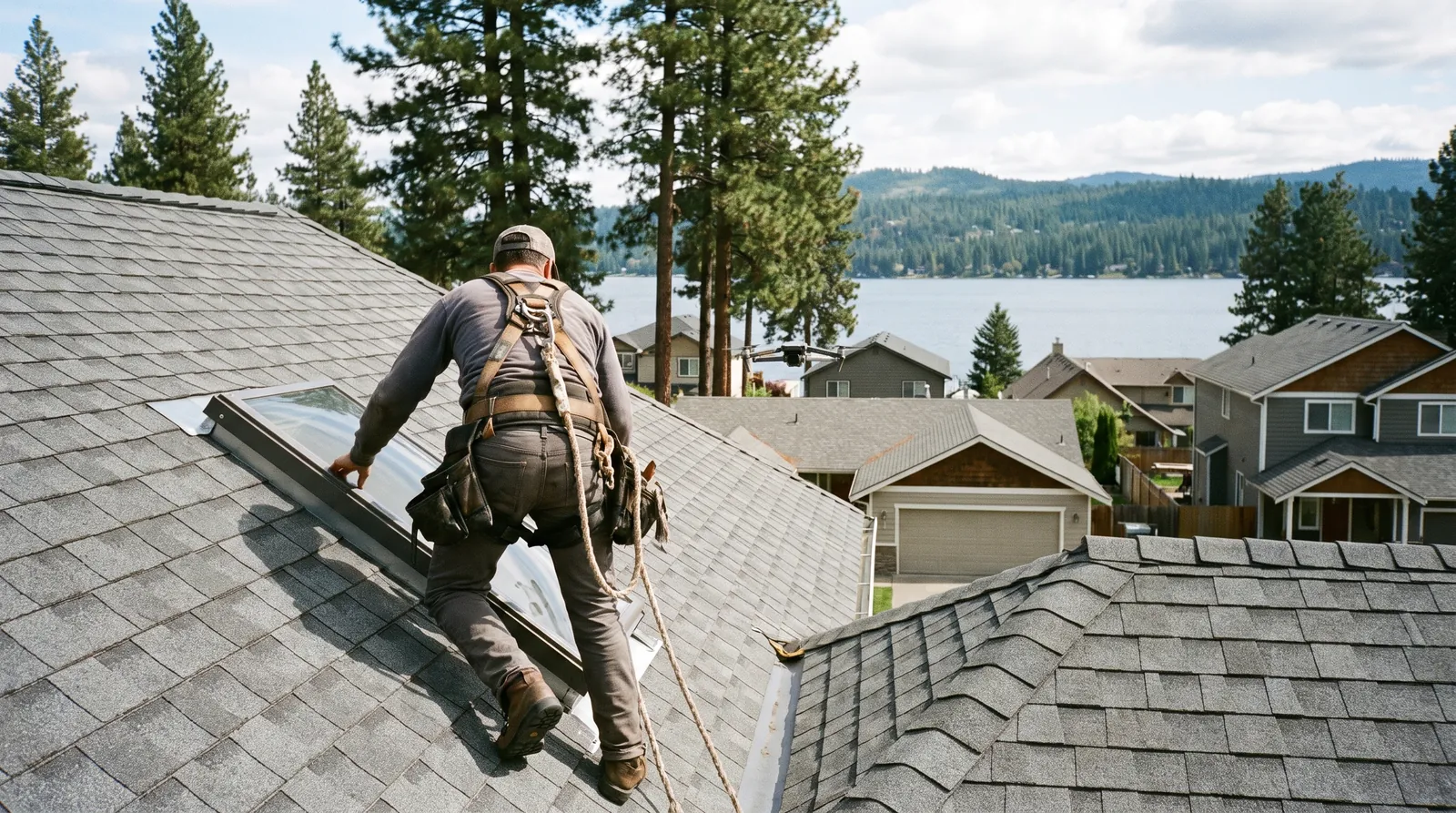
Yes. We reflash it if the unit is still sound and replace it if it is an old acrylic bubble. Our skylight page explains more.
How long will a flashing repair take?
Half a day for most. A chimney that needs a cricket plus counterflashing cut into the mortar takes a full day.