Dry skylights, and attics that stop baking the shingles
On 1990s houses in Greer we keep running into the same pair of problems. One is a skylight that has fogged up or started leaking. The other is an attic that climbs to 140 degrees because someone painted the soffits shut. Neither costs much to fix, and both are cheapest to fix during a re-roof.
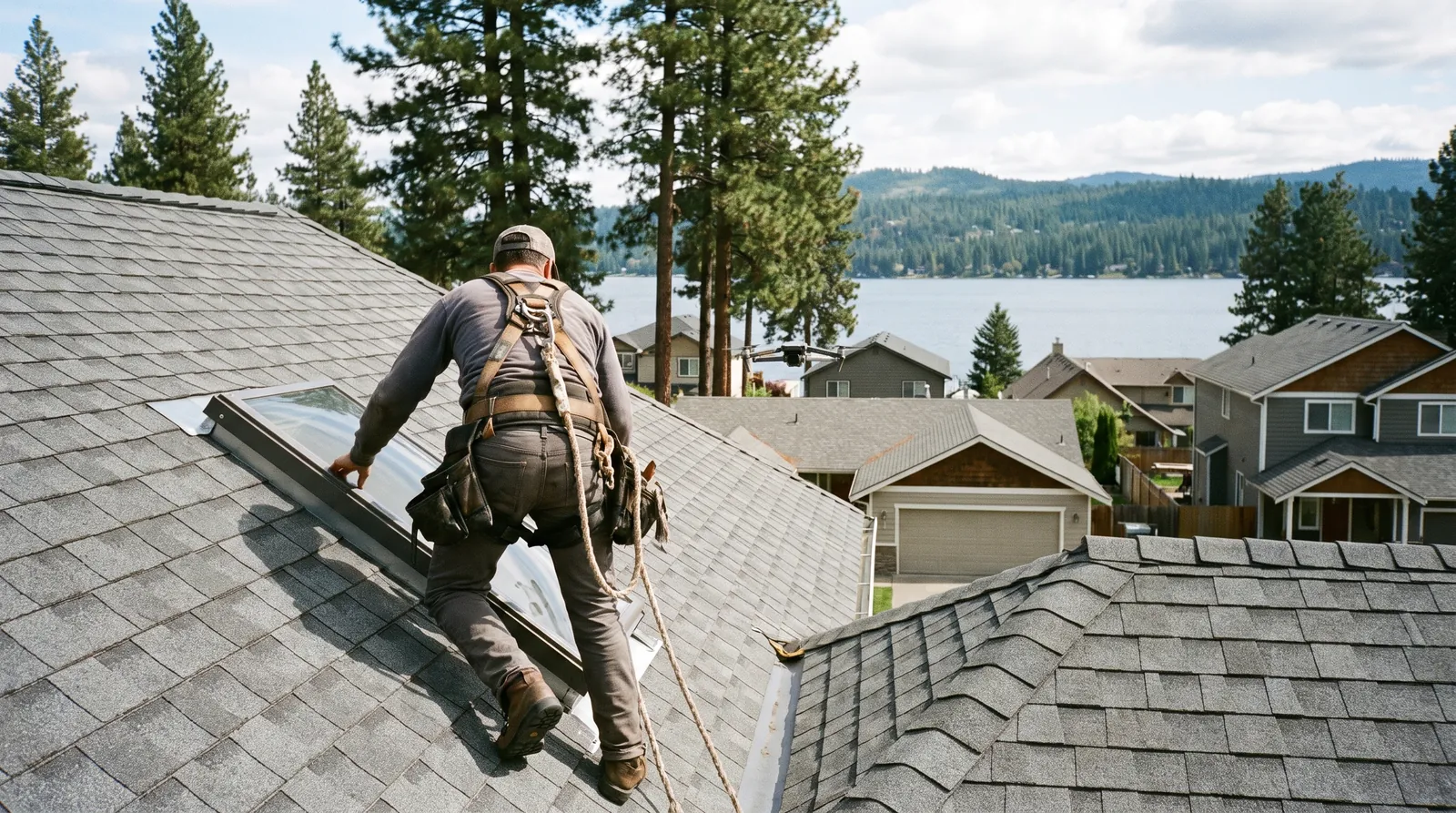
A skylight is a pleasure right up until it starts to fail. The acrylic bubble skylights put into Greer subdivisions during the 1980s and '90s have reached the end of their service. They fog over, crack along the frame and leak at the curb flashing, and that water ends up on the ceiling drywall and the framing beneath it. We swap them for Velux deck-mounted skylights in the same opening, using the manufacturer's flashing kit, and the job takes a few hours. A re-roof is the natural moment to do it, since the new flashing goes in along with the new shingles.
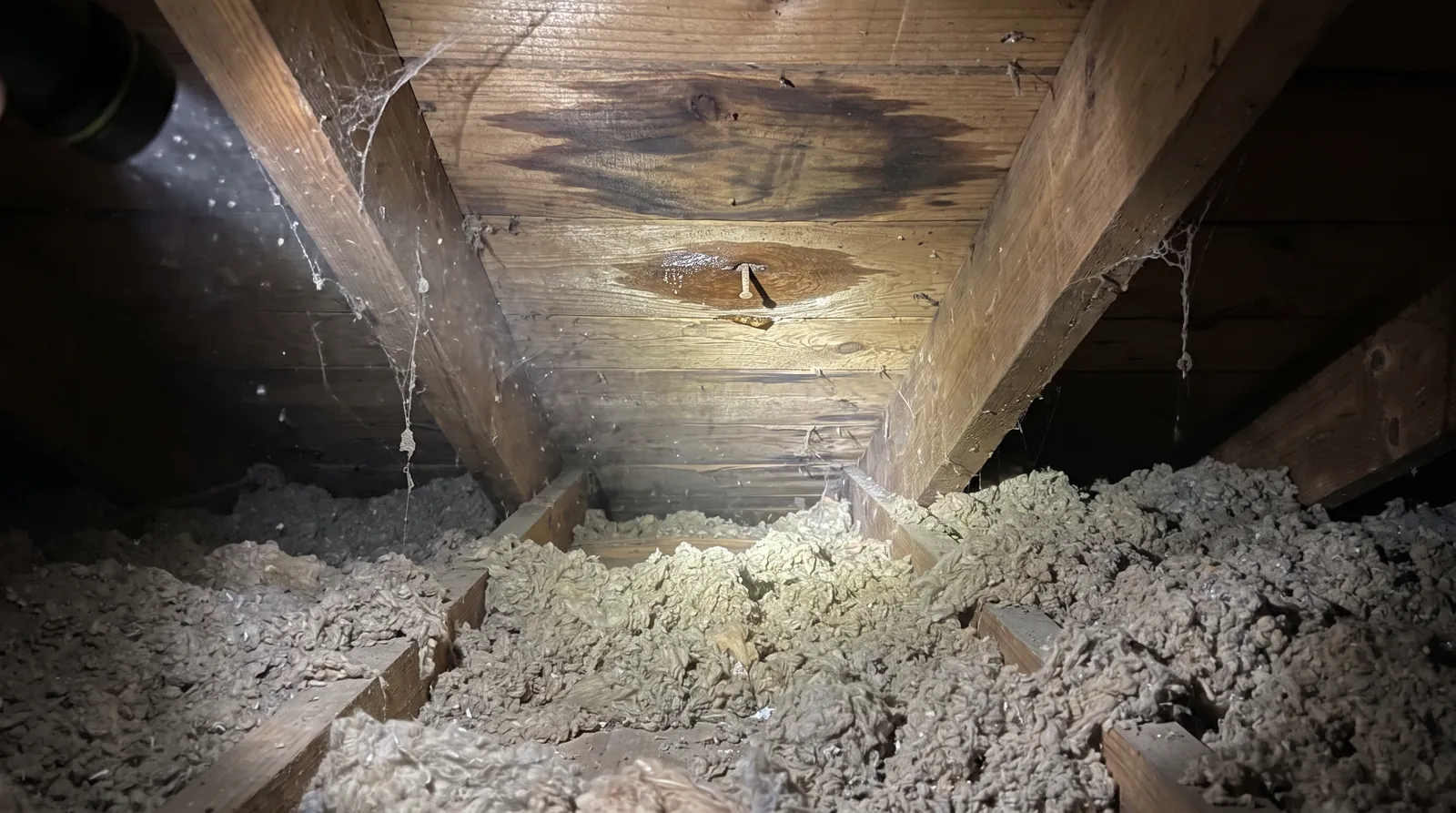
The quieter problem is attic ventilation. Upstate houses from those decades usually have a handful of static turtle vents on the back slope, and soffit vents that either were never cut through or were painted over later. On a July afternoon the attic reaches 130 to 150 degrees. That heat cooks the shingles from underneath, pushes up the cooling bill and can void some shingle warranties. The cure is ventilation that is balanced: a continuous ridge vent to let air out, and soffit intake that is open, baffled and clear of insulation to let air in, so it actually flows. Where the shape of the roof cannot fit enough ridge vent, a powered or solar attic fan helps.
The work, piece by piece
New skylights
Velux deck-mounted units, whether fixed, manual or solar-venting, set in the existing opening with the matching flashing kit.
Skylight reflashing
Units that are still sound but leak at the curb get resealed and reflashed.
Sun tunnels
Tube skylights for baths, hallways and closets where there is no ceiling access.
Ridge vent
A continuous ridge vent under shingles in place of turtle vents, with the exhaust area worked out for your attic.
Soffit intake
Baffled vents cut into the soffit, or a continuous vented soffit, so the ridge vent has air to draw from.
Attic fans
Powered or solar fans on thermostats for roofs that cannot fit enough ridge vent.
What skylights and ventilation cost in Greer, SC
| Item | Usual price, installed | Good to know |
|---|---|---|
| Velux fixed skylight, standard size, replaced | $1,200 – $2,200 | Flashing kit and install included |
| Solar-venting skylight (eligible for tax credit) | $2,200 – $3,800 | Comes with rain sensor and remote |
| Skylight reflashed or resealed | $350 – $800 | Only when the unit itself is sound |
| Sun tunnel | $900 – $1,600 | Price is installed |
| Ridge vent on a typical house | $500 – $1,200 | Costs less during a re-roof |
| Soffit intake vents cut in | $400 – $1,200 | Baffles are part of the price |
Skylight prices cover the unit, its flashing kit, putting the interior trim back and hauling away the old one. Ventilation is priced by the linear foot of ridge and by the number of soffit vents, and it costs a good deal less when done during a re-roof.
From the job photos
Skylights & ventilation: what people ask us
My skylight leaks. Should it be repaired or replaced?
Replace it if it is an acrylic bubble or more than 20 years old. The seals and frame are worn out, and new flashing would only get you about a year. A glass skylight younger than 15 years that leaks at the flashing can usually be reflashed.
Is a re-roof a good time to replace skylights?
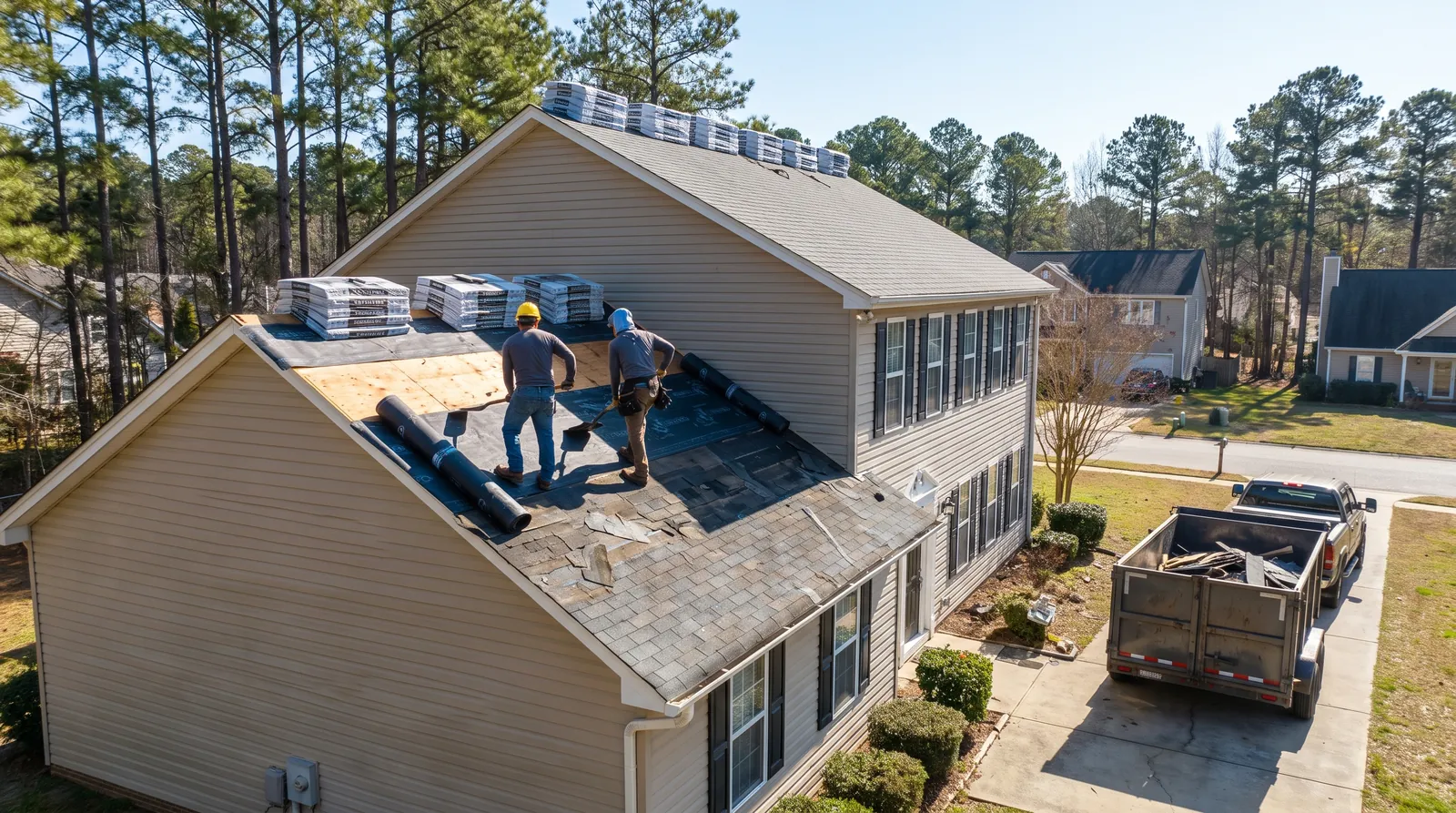
It is the ideal time. The new flashing kit ties in with the new underlayment and shingles, and the labor costs less. Either way, we include a price for it on the estimate.
Do solar skylights really qualify for a tax credit?
Solar-powered venting skylights from Velux have been eligible for the federal solar tax credit, but confirm the current rules with whoever prepares your taxes. They also shut on their own when it starts to rain.
How can I tell if my attic lacks ventilation?
Signs include an attic far hotter than the outdoors in summer, shingles that curl or age before their time, frost or moisture on the nails in winter, and soffit vents that are visibly painted over or packed with insulation. We look at ventilation during every inspection.
Should I use ridge vent or an attic fan?
On nearly every gable or hip roof, ridge vent with soffit intake. It is passive and silent and has no motor to burn out. A fan makes sense on low-slope or complicated roofs that have too little ridge. Never combine a fan with a ridge vent, because the fan will pull air in through the ridge instead of the soffits.
Can poor ventilation void a shingle warranty?
Yes. The big manufacturers require ventilation that meets FHA/HUD minimums before they honor the full warranty, and we bring it up to that level on every re-roof.