How people pay for a roof here
What a standard South Carolina homeowners policy will and will not cover, how the money from a storm claim arrives, and loan options for a replacement, a deductible or an upgrade.
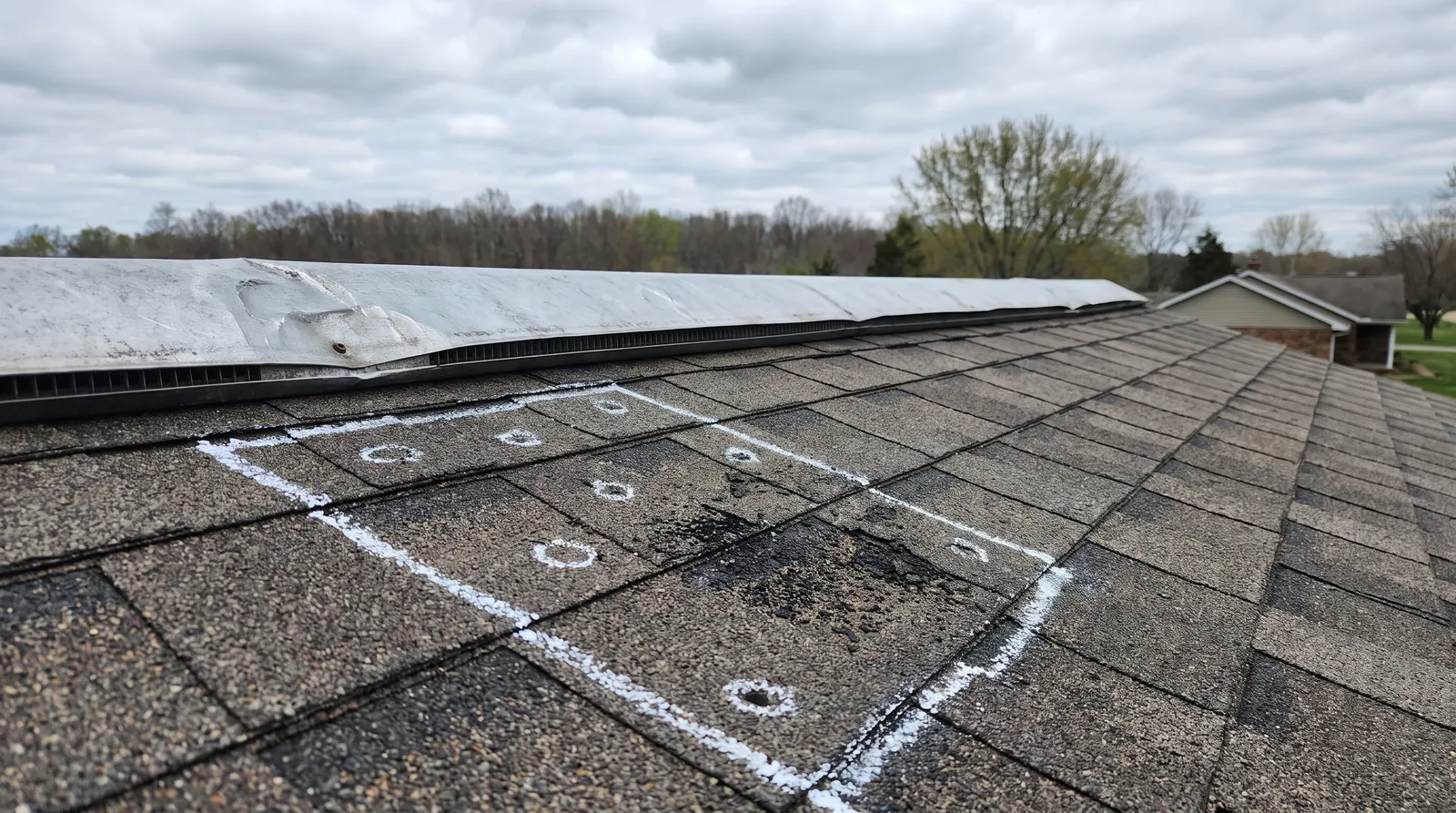
When insurance pays
A standard homeowners policy in South Carolina covers storm damage from wind, hail or falling trees, minus your deductible. For wind and hail, that deductible is now often 1 to 2 percent of the dwelling coverage instead of a flat $1,000. Age, normal wear and skipped maintenance are not covered under any policy.
How the check arrives depends on the policy. Under replacement-cost coverage, the carrier sends the depreciated amount first and releases the remainder after the work is done. Under an ACV roof endorsement, which older roofs often carry, the depreciated amount is all you get. The claims guide walks through this in more depth, and our claims service covers the inspection, the meeting with the adjuster and the estimate.
Waiving a deductible is a crime in South Carolina, so we never do it. We also never pad a claim. Our job is to make it complete.
Loans for a new roof
A replacement in Greer usually costs somewhere between $9,000 and $20,000, and many owners prefer to pay that over time. We work with a national home-improvement lender. You apply from your phone, pre-qualify with a soft credit check, and choose anything from a 12-month same-as-cash offer to a 10-year fixed loan. The lender pays us only when the work is complete and you have approved it. If you already have a HELOC, it is usually the cheaper route.
Ways to lower the bill without cutting corners
- Have the storm inspection done first. Covered damage can mean the new roof costs you the deductible rather than the whole price.
- Add the extras during the re-roof. Gutters, guards, skylights and ventilation cost less while the crew is already there.
- Look at Class 4 shingles. The insurance discount usually earns the upgrade back in five to eight years.
- Repair if the roof still has years in it. We will say so when that is the case.
- Get the ventilation right. Nothing else does as much, for as little, to help the next roof last.
Things we refuse to do
- Collect the full price before the job, or offer "cash today" storm specials.
- Waive a deductible or quietly absorb it.
- Open a claim for a roof that has no damage.
- Lay new shingles over old ones just to come in at a lower number.
Paying for a roof: common questions
Which financing do you offer?
Home-improvement loans through an outside lender. Pre-qualifying uses a soft credit pull, terms run from 12 months same-as-cash up to a 10-year fixed loan, a decision usually comes back in minutes, and the lender pays once the work is complete.
Is there a minimum amount to finance?
Roughly $2,500. That covers any replacement, or a repair combined with new gutters.
Can the loan cover only my deductible?
Yes. When insurance is paying for a replacement, plenty of homeowners finance the deductible, along with upgrades such as Class 4 shingles or metal that the claim will not pay for.
Can I pay by credit card?
Yes. A deposit by card carries no surcharge. Large balances paid by card have a small processing fee, and the estimate states it.
Does it cost less to add gutters or a skylight while the roof is being replaced?
Yes, because the crew is already on site and the eave is already open. Gutters, guards, skylights and ventilation all come out cheapest when they are folded into a re-roof.